Posted on Leave a comment

AI SEO, LLM Optimization & Generative Engine Optimization

Let’s be honest about something: the way people find information on the internet is changing faster than most businesses can keep up with. Not in a “we should probably update our blog” kind of way. In a fundamental, ground-shifting kind of way.

In 2023, Google handled roughly 8.5 billion searches per day. By early 2024, an estimated 14% of those searches were being answered at least partially by AI-generated overviews before the user ever clicked a single link. ChatGPT crossed 100 million users faster than any platform in history. Perplexity AI grew from 10 million to over 100 million monthly visitors in under 18 months. And Microsoft embedded AI directly into Bing, the world’s second-largest search engine.

None of this is noise. This is a signal.

The businesses that understand what’s happening and act on it will dominate their categories in the next three to five years. The ones that don’t will watch their organic traffic quietly disappear, wondering why their perfectly optimized pages stopped ranking.

This guide exists to make sure you’re in the first group.

1. What Is Generative Engine Optimization (GEO)?

Traditional SEO was built for one purpose: getting your content to rank high on a search results page so a human would click on it. Every tactic keywords, backlinks, page speed, and meta descriptions served that click. The metric that mattered was position on page one.

Generative Engine Optimization is different in a very important way. Instead of optimizing to earn a click from a human browsing results, you’re optimizing to earn a citation or an answer from an AI system that is synthesizing information on behalf of the user.

When someone types “What’s the best CRM for a 10-person sales team?” into ChatGPT or Google’s AI Overview, they don’t get ten blue links. They get a conversational answer. That answer comes from somewhere. It’s built from content that AI systems have decided is credible, clear, and authoritative. GEO is the practice of making sure your content is that source.

The Three Engines You're Now Optimizing For

The landscape has fragmented in a way that would have seemed unlikely just a few years ago. Today, a business needs to think about three distinct types of generative engines:

  • Large Language Model Chatbots: ChatGPT, Claude, Gemini, and Meta AI. These systems answer questions conversationally and draw on massive training data plus real-time web browsing. When users ask them product questions, comparison questions, or how-to questions, they synthesize answers. Your content can be or not be part of what gets synthesized.
  • AI-Enhanced Search Engines: Google’s AI Overviews, Microsoft Copilot in Bing, and Perplexity. These sit directly on top of traditional search and intercept the queries that used to produce clicks. The AI answers the question; the links are secondary.
  • Vertical AI Tools: Industry-specific platforms, legal research tools, medical information systems, financial advisors, and travel planners that use LLMs trained on specialized data. These are growing fast and will be enormously important for businesses in specific categories.

Optimizing for all three requires a different approach than traditional SEO, though it builds on many of the same foundations.

How GEO Differs From Traditional SEO

Factor Traditional SEO vs. GEO
Primary Goal Rank on page 1 → earn clicks | Be cited as a source → earn mentions
Success Metric Click-through rate, rankings | Citation frequency, share of voice in AI answers
Content Goal Satisfy a keyword | Answer a question with depth and authority
Link Strategy Backlinks for domain authority | Backlinks + structured data + citation signals
Speed of Change Months to see impact | Weeks, as AI indexes update faster
Measurement Google Search Console, rankings | Brand mention tracking, AI visibility tools

2. The Data Behind the Shift: Why This Is Not Hype

Before we go further, let’s look at what the numbers actually say. Because this is a genuine transformation, not a marketing trend.

Search Volume Is Not Declining; It's MigratingThe Organic Traffic Paradox

%

Of all searches, they are now "zero-click."

Meaning the user got their answer without visiting any website: up from 34% in 2019 (SparkToro, 2024)
%

Of Google searches trigger an AI Overview

That percentage is rising month over month: in some categories, it’s already above 30%
M+

ChatGPT users reached in 60 days

No platform in internet history has scaled this fast: not Instagram, not TikTok (Reuters, 2023)
%

Of Perplexity users cite it replacing Google

In a survey of Perplexity’s user base, more than half said they use it instead of traditional search, not alongside it
X

More likely to trust AI-cited sources

Users shown AI answers with source citations are 3x more likely to trust the information than if they found it via traditional search (Edelman, 2024)

Here’s what makes this shift so confusing for most businesses: Google’s overall search volume is not dropping. In fact, it’s still growing. But organic clicks to websites are declining in certain categories even as searches increase.

How? Because AI Overviews answer the question before the user clicks. Travel queries, health information questions, recipe searches, product comparisons, and how-to questions these categories have seen click-through rates drop by 15-30% in the 12 months following AI Overview rollout in their regions. The traffic that used to flow to informational content is being intercepted.

For businesses that built their organic strategy on informational content and the classic “create helpful content and earn traffic” playbook, this is a direct hit to their funnel.

The Counterintuitive Opportunity

Here’s what most people miss: when AI systems cite a source, they often create stronger brand awareness than a buried page-3 ranking ever did. A user who sees ‘According to [Your Brand], the best approach is…’ in a ChatGPT response has received a trusted endorsement from an AI they rely on. The nature of the conversion changes from click to impression, but the brand value can be higher.

Where AI Search Is Growing Fastest

The migration isn’t uniform. Some query types are being absorbed by AI engines much faster than others. Based on data from Google’s own announcements, Semrush research, and industry tracking, here’s where the shift is already most pronounced:
Query Type AI Search Impact Level & Notes
Product Comparisons VERY HIGH: AI answers “X vs Y” questions directly, reducing comparison site traffic
How-To & Tutorials VERY HIGH: step-by-step answers are exactly what LLMs do well
Health & Medical HIGH  Google’s AI Overviews heavily feature in health queries
Financial Guidance HIGH  “How do I…” finance questions increasingly answered by AI
Travel Planning HIGH  itinerary and destination queries intercepted by AI tools
Local Search MODERATE  Google Maps and local results still dominate, but AI is entering
Transactional/Buy LOWER  users still tend to click through to purchase, but this is changing
Brand Searches LOWER  direct brand queries still route to websites predominantly

3. How LLMs Actually Work and Why It Matters for SEO

How LLMs Are Trained and What They Know

Large language models are trained on enormous amounts of text data: books, websites, academic papers, forums, and documentation. During training, they learn patterns: which words follow which, how topics are discussed, what the relationship is between concepts, and crucially, which sources and voices appear most often when discussing specific topics.

When an LLM answers a question, it’s not searching the web in real-time (unless it has a browsing plugin). It’s drawing on compressed representations of the knowledge it absorbed during training. Content that appeared frequently, consistently, and in authoritative contexts during training has a higher probability of being reflected in the model’s outputs.

This means if your brand has published clear, accurate, well-cited content on a topic over years, you’ve already been feeding the training data that shapes what models say. If you haven’t, or if competitors have published more and better, the model’s default worldview doesn’t include you.

Retrieval-Augmented Generation (RAG) The Bridge to Real-Time

Here’s where things get more current. Most enterprise AI search tools, including Perplexity, Google’s AI Overviews, and ChatGPT’s browsing mode, don’t rely solely on training data. They use a technique called Retrieval-Augmented Generation (RAG).

In RAG-based systems, the AI pulls live content from the web, selects the most relevant passages, and uses those passages as context when generating its answer. This means the freshness, structure, and clarity of your published content matter right now, not just historically.

For RAG, the AI is evaluating your content on criteria including: Does this passage directly answer the question? Is it structured clearly so a machine can extract the relevant part? Is the source credible based on domain authority signals? Is the content recent and accurate?

Retrieval-Augmented Generation (RAG) The Bridge to Real-Time

Here’s where things get more current. Most enterprise AI search tools, including Perplexity, Google’s AI Overviews, and ChatGPT’s browsing mode, don’t rely solely on training data. They use a technique called Retrieval-Augmented Generation (RAG). In RAG-based systems, the AI pulls live content from the web, selects the most relevant passages, and uses those passages as context when generating its answer. This means the freshness, structure, and clarity of your published content matter right now, not just historically. For RAG, the AI is evaluating your content on criteria including: Does this passage directly answer the question? Is it structured clearly so a machine can extract the relevant part? Is the source credible based on domain authority signals? Is the content recent and accurate?

What Makes Content "Citation-Worthy" for AI

Based on documented research and public testing of how AI systems cite content, the factors that consistently predict higher citation rates include:

  • Directness of answer: Content that answers the question in the first paragraph, not the fifth
  • Declarative sentences: Statements structured as facts (“The average cost is…”) rather than hedging language (“It depends, but some might say…”)
  • Structured data: FAQs, how-to schemas, and table markup help AI systems extract structured knowledge
  • Original data and research: Content containing proprietary statistics, original studies, or unique survey data gets cited far more often because it offers something AI can’t generate itself
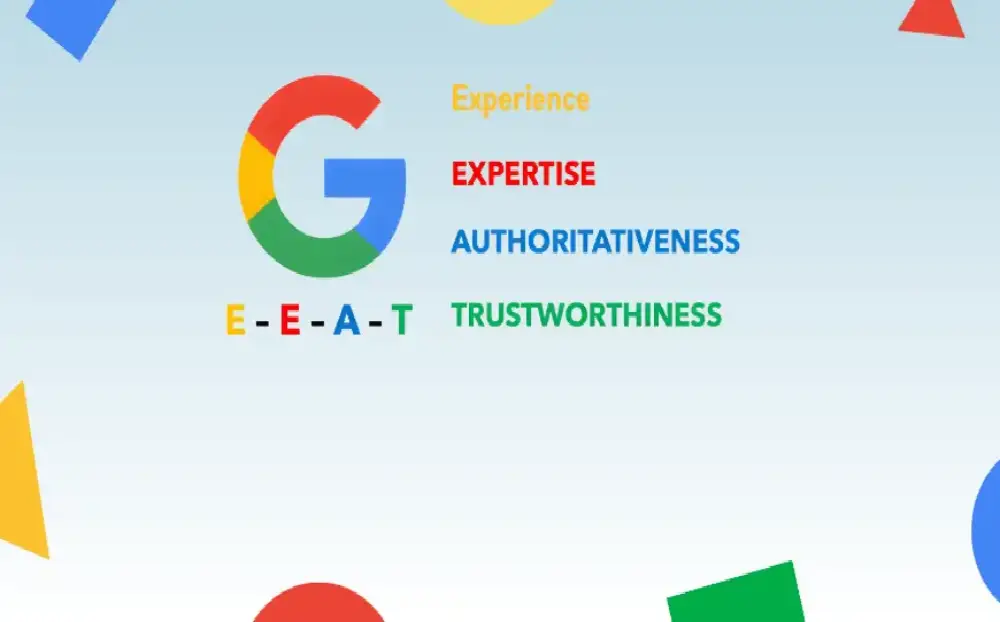
  • Author expertise signals: Bylines with credentials, author bio pages, and linked professional profiles help establish the E-E-A-T (Experience, Expertise, Authoritativeness, Trustworthiness) signals that Google and AI systems rely on
  • Citation and linking patterns: Content that cites primary sources and is itself cited by credible third parties carries stronger trust signals

The Depth-Over-Volume Shift

One of the most consistent findings across AI search research is that AI systems favor fewer, deeper, higher-quality sources over many shallow ones. If you’ve built an SEO strategy on publishing large volumes of thin content, that approach is not just ineffective for AI SEO; it may actively dilute your authority in training data.

4. Why Your Business Needs an AI SEO Strategy Right Now

There’s a version of this conversation that goes, “AI SEO is important, but we can wait and see how it develops.” That reasoning has a cost that compounds over time, and here’s why.

The Training Data Window Is Closing

The models being trained today are training on the content published today. GPT-5, Gemini 2.0, Claude 4, Llama 4, and  whatever comes next  are being shaped by what exists on the web right now. The brand that publishes authoritative, well-structured, frequently cited content over the next 18-24 months is buying influence in the next generation of models.

Waiting until those models are deployed to start building your content authority is like waiting until election day to start campaigning. The conversation has already happened.

Your Competitors Are Already Moving

In every major B2B and B2C category, there are companies that spotted this shift 12-18 months ago and began restructuring their content strategy. They’re now accumulating the backlinks, citations, schema markup, and topical authority that will translate into AI citations as these systems mature.

The good news: in most categories, the race is still early enough that a committed 6-12 month investment can put you in a competitive position. The window won’t stay open forever.

The Funnel Is Being Rebuilt Around You

Consider the traditional B2B buyer journey: problem awareness → category research → vendor comparison → shortlist → purchase. AI is now inserting itself into every stage of that journey, and it’s inserting the vendors it knows best.

When your potential buyer asks their AI assistant, “What tools do companies use to manage project timelines?” they get a list. If your product isn’t on that list, you’ve been eliminated before the buyer ever typed your name. That’s not an organic ranking problem. That’s a brand awareness problem at the AI layer.

Building AI visibility means rebuilding your presence in the layer of the funnel that increasingly happens before any website visit occurs.

Measurement Is Harder but Not Impossible

One legitimate challenge of AI SEO is measurement. You can’t check your “AI ranking” the way you check your Google position. But measurement is developing quickly. Tools like Profound, Brandwatch, and several others now track how often your brand appears in AI-generated answers across major platforms. You can monitor citation share, answer inclusion, and brand mention frequency in AI outputs; these are the new KPIs. The businesses that start measuring now will have baseline data that becomes enormously valuable in 18 months when these metrics become standard reporting requirements.

5. The Businesses That Need AI SEO Most Urgently

Not every business faces the same urgency. But the categories below are experiencing the most direct disruption from AI search and have the most to gain from moving quickly.

Category 1: E-Commerce and Retail Brands

Product comparison queries like  and “isworth it” are among the highest-volume, highest-intent searches in consumer retail, and they’re being heavily intercepted by AI. Google’s AI Overviews now appear on these queries constantly, and Perplexity has built an entire product discovery feature around them.

For e-commerce brands, this means that the informational content that used to funnel buyers to product pages is no longer reliably generating that funnel. The brands winning in this environment are building rich, structured product knowledge content that AI systems recognize as authoritative, and they’re getting cited in AI answers that reach buyers before any search result page does.

Immediate priority: Product FAQ schema, structured comparison content, and review aggregation markup.

Category 2: B2B SaaS and Technology Companies

The B2B buying journey for software involves more research, more comparison, and more information-seeking than almost any other category.

Buyers are researching solutions for weeks or months before engaging sales. And they’re increasingly doing that research with AI assistants.

“What’s the best tool for [use case]?” is now one of the most common inputs to ChatGPT and Claude from business professionals. If your product doesn’t appear in those answers, you’re invisible in the most critical part of the consideration phase.

Immediate priority: Use-case-specific content, integration documentation, competitive positioning content, and thought leadership that positions your brand as a category authority.

Category 3: Healthcare and Wellness Providers

Health information queries are among the most frequently intercepted by AI and among the most sensitive to get right. Google has implemented strict E-E-A-T requirements for health content precisely because AI-generated health misinformation is a real risk. This creates an opportunity for credentialed providers and health brands who can publish content that demonstrates genuine clinical expertise.

Practices, health systems, telehealth platforms, and wellness brands that build medically reviewed, clearly attributed, structured health content are the ones that will be cited in AI health answers, which carry enormous trust weight with patients.

Immediate priority: Author credentials markup, medical review processes, FAQ structured data, and condition-specific content depth.

Category 4: Financial Services

Questions about investing, insurance, mortgages, taxes, and personal finance are among the most valuable query categories in search, and they’re increasingly being answered by AI. The challenge: AI systems apply the same YMYL (Your Money, Your Life) skepticism that Google does, meaning they prefer credentialed, regulated, clearly attributed sources.

Financial advisors, fintech platforms, insurance companies, and banks that establish content authority and expertise signals now will occupy the citation positions that matter most when buyers are making high-stakes financial decisions with AI assistance.

Immediate priority: author credentials, regulatory compliance signals in content, original financial data and analysis, and FAQ schema on high-intent financial questions.

Category 5: Legal Services

Legal query volume is massive, and AI is already changing how people access legal information. “Do I need a lawyer for…?”, “What are my rights if…?” “How does [legal process] work?” These are high-intent queries that AI answers confidently, often without directing users to an attorney.

Law firms and legal platforms that publish authoritative, jurisdiction-specific, attorney-attributed content on these queries have an enormous opportunity to become the source AI cites when potential clients are deciding whether and whom to hire.

Immediate priority: Practice area expertise content, local jurisdiction specificity, attorney profile optimization, and FAQ schema on common legal questions.

Category 6: Travel and Hospitality

Travel planning is one of the use cases where AI has made the most visible inroads. ChatGPT and Perplexity can now build multi-day itineraries, compare hotels, and recommend restaurants with a conversational naturalness that Google’s traditional results couldn’t match. The click-through rates from travel queries to travel websites have taken significant hits as a result.

Hotels, tour operators, destination marketing organizations, and travel agencies that build AI-friendly content detailed destination guides, structured itinerary content, FAQ-rich property descriptions will be cited in AI travel recommendations. Those that don’t will find AI building itineraries without mentioning them at all.

Immediate priority: structured destination content, property schema markup, and unique experiential content that AI can’t generate from generic training data.

Category 7: Education and EdTech

Students and professionals are using AI tools for learning, research, and course discovery at scale. Queries like “best online courses for [skill]” and “how to learn [subject]” are common inputs to AI assistants. Education providers, universities, online learning platforms, and professional training companies need to be in the consideration set these AI systems surface.

Immediate priority: Course and curriculum schema, instructor expertise signals, learning outcome content, and original research or educational resources that AI systems will cite.

Category 8: Local Service Businesses at Scale

This one surprises some people. But consider: a plumbing company, a dental practice, a law firm with multiple locations, a restaurant group, or any local service business with enough locations or enough digital presence to rank nationally in their category faces real AI search exposure.

Local AI search is developing quickly. Google’s AI features are integrating with local signals. Users asking “best dentist near me” or “who do I call for emergency plumbing” are starting to get AI-assisted answers. The businesses with structured local content, rich review signals, and established authority in their service categories will win this wave.

Immediate priority: Local business schema, review signals, service-area content depth, and FAQ optimization for high-intent local queries.

6. The Core Pillars of an AI SEO Strategy

So what does an actual AI SEO strategy look like? Here are the foundational elements that every business should be building.

Pillar 1: Entity Optimization

Traditional SEO is keyword-based. AI SEO is entity-based. An entity is a real-world thing a person, a company, a product, or a concept that AI systems can recognize, define, and form relationships between.

Google’s Knowledge Graph and similar structures in AI training data represent the world as a network of entities and relationships. Nike is an entity. “Athletic footwear” is an entity. The relationship between them is encoded in training data. When AI answers a question about athletic footwear brands, it draws on those entity relationships.

Entity optimization means ensuring that your brand, your products, and your expertise areas are clearly defined, consistently represented, and well-connected in structured data across your web presence. This includes Wikipedia presence, Wikidata entries, Google Business Profile, industry directory listings, and structured data markup on your own site.

Pillar 2: Topical Authority Over Keyword Coverage

AI systems don’t just match keywords; they evaluate the overall topical authority of a domain. A site that has 200 well-researched, deeply informative articles about a single topic is far more likely to be cited as an authoritative source than a site with 2,000 thin articles covering 50 loosely related topics.

Building topical authority means creating comprehensive, interlinked content clusters that demonstrate deep expertise in your core subject areas. Think: not just one article about “email marketing best practices” but a complete ecosystem of content about email marketing strategy, tactics, metrics, tools, case studies, FAQs all interlinked and structured.

Pillar 3: Structured Data and Schema Markup

Schema markup is the language of machine-readable content. When you mark up your content with appropriate schema types (FAQ, HowTo, Article, LocalBusiness, Product, Review, Person), you’re making it easier for AI systems to understand what your content is about and extract the right information.

FAQ schema in particular has shown a strong correlation with AI Overview inclusion. How-to schema is highly cited in AI answers to procedural questions. Product schema improves inclusion in AI shopping and comparison features. This isn’t optional anymore; it’s a baseline.

Pillar 4: Original Data, Research, and Unique Insights

Here’s something AI simply cannot do on its own: produce original data. AI can synthesize, summarize, and explain, but it cannot conduct original surveys, run proprietary studies, or generate unique statistics that don’t already exist somewhere.

Brands that invest in original research, customer surveys, industry benchmark reports, and proprietary data analysis are creating content that AI systems must cite because it’s the only source for that specific insight. This is one of the highest-leverage content investments in the AI SEO era.

Pillar 5: E-E-A-T Signals at Scale

Google’s E-E-A-T framework (Experience, Expertise, Authoritativeness, Trustworthiness) has become even more important in the AI era because AI systems are applying similar filtering logic. Content attributed to credentialed experts, published on authoritative domains, supported by external citations, and backed by demonstrated experience carries stronger trust signals.

This means: make sure your authors are real people with visible credentials. Publish author bio pages. Get your experts cited in industry publications. Build a PR strategy that earns brand mentions on high-authority sites. Each of these contributes to the trust signal stack that AI systems use when deciding whose content to surface.

Pillar 6: Conversational Content Optimization

Traditional SEO content was often built around short-tail keywords. AI search processes natural language queries, full questions, conversational phrases, and multi-part questions. Your content needs to match the way people actually talk to AI systems.

This means building content that directly answers specific questions, using question-and-answer structures, and anticipating the follow-up questions a user might have. FAQ sections at the end of articles are particularly powerful. So are “People Also Ask”-style content expansions. The goal is to be the content that answers the question the AI is trying to answer.

7. Measuring AI SEO Performance

The measurement challenge is real, but the toolkit is developing. Here’s what to track and how.

Brand Mention Monitoring in AI Outputs

Tools like Profound and Otterly. AI and SearchGPT trackers allow you to monitor how often your brand appears in responses from major AI platforms. Running regular test queries in your category and tracking whether your brand is included in the answer is a starting point available to any business right now.

Share of Voice in AI Answers

Beyond just checking whether you appear, you want to understand how often you appear relative to competitors. If you’re mentioned in 15% of relevant AI answers and your main competitor is mentioned in 40%, that’s a competitive gap that needs closing. Building a systematic tracking protocol running defined query sets monthly and logging inclusion rates gives you the trend data to act on.

Traditional SEO + AI Integration Metrics

Don’t abandon traditional metrics. Organic traffic, rankings, and conversion rates still matter, and they give you signals about how the AI shift is affecting your specific category. If your traffic is declining on informational content but holding on transactional content, that pattern tells you where AI is eating into your funnel.

Also watch for zero-click rate increases on your target keywords, featured snippet capture rate (strongly correlated with AI Overview inclusion), and direct traffic trends (users who found you via AI mention and typed your URL directly).

Content Authority Signals

Monitor the metrics that feed into AI authority: referring domain growth, brand mention volume on external sites, expert contribution mentions in industry publications, and structured data coverage across your site. These are lagging indicators; they take months to build, but they’re the foundational metrics of AI visibility.

8. Common Mistakes to Avoid

Mistake 1: Treating AI SEO as Separate from Traditional SEO

The most effective AI SEO strategies don’t start over; they build on the foundations of good traditional SEO. Technical SEO, content quality, link building, and page experience all of it still matters. AI search layers on top of traditional search quality; it doesn’t replace it. Treating them as entirely separate programs wastes resources and creates gaps.

Mistake 2: Chasing AI Mentions at the Expense of User Experience

Some businesses, upon discovering that AI systems favor direct, declarative content, restructure all their content to sound like an FAQ answer, stripping out personality, voice, and the human qualities that make content compelling to read. This is a mistake. AI systems are trained on content that humans found valuable enough to read and share. Content that users don’t engage with doesn’t accumulate the signals that make AI systems cite it.

Mistake 3: Ignoring the Long Game on Original Research

Original data and proprietary research are the most powerful AI citation magnets available, but they take time and investment to produce. The mistake is deprioritizing this because it doesn’t fit into a standard content calendar. Brands that commit to one significant original research piece per quarter, even a 300-respondent customer survey, will, over two years, build a citation library that competitors can’t easily replicate.

Mistake 4: Not Building Entity Presence Proactively

Many businesses are passive about their entity presence; they have a website and a Google Business Profile and assume that’s enough. In AI SEO, this is insufficient. Proactively ensuring your brand entity is well-represented in structured data, industry databases, knowledge graph sources, and third-party review platforms is work that pays compounding dividends.

Mistake 5: Waiting for Perfect Measurement

The measurement tools for AI SEO are not yet as mature as Google Search Console. Some businesses use this as a reason to delay investment. But waiting for perfect measurement in a fast-moving landscape means ceding ground to competitors who are acting with imperfect information and iterating. Start, measure what you can, and improve as tools mature.

9. Where This Is All Heading: The Next 18-24 Months

Predicting the future of AI is genuinely difficult; the pace of development makes most forecasts obsolete quickly. But a few trends are clear enough to plan around.

Personalized AI Answers

AI search is moving toward personalization. Your AI assistant will increasingly remember your preferences, your history, your industry, and your context and tailor answers accordingly. This will create new targeting opportunities for brands: being the source that AI cites for a specific audience segment, not just a specific topic.

Multimodal AI Search

Text-based queries are already expanding to include image search, voice search, and video search with AI interpretation. A user taking a photo of a product or speaking a question to a voice assistant is getting AI-mediated answers. Brands that optimize across modalities structured image metadata, conversational content for voice, video transcription, and schema will have coverage advantages.

AI Agents Doing Research on Your Behalf

The next step beyond AI search is AI agents that autonomously research topics, compare options, and even make recommendations or purchases on behalf of users. When a user tells their AI agent to “find me the best B2B accounting software for a 50-person company and set up a demo,” the agent will do the research, evaluate options, and take action. The brands in that agent’s consideration set based on their AI visibility get the opportunity. The brands that aren’t are invisible.

The Rise of AI-Native Platforms

New platforms are being built from the ground up as AI-native environments, discovery platforms, research tools, buying guides, and industry resources that use AI as the primary interface. These platforms will have their own visibility dynamics, their own citation patterns, and their own authority signals. Brands that build relationships with these platforms early through data partnerships, content contributions, and structured data sharing will have advantages as they scale.

Closing: The Opportunity Is Right Now

The businesses that will lead their categories in five years are not necessarily the ones with the biggest content libraries or the highest current domain authority. They’re the ones that understood the shift happening right now and started building for it.

AI SEO is not about abandoning what you know works. It’s about extending it, building the entity presence, topical authority, original research, and structured data that positions your brand as a trusted source in the AI layer of the internet.

The search box is not disappearing. Neither is the link. But between the question and the answer, there is now a layer that decides what gets through, and the brands that earn their place in that layer will have a distribution advantage that compounds for years.

Start with what you can do this quarter: audit your structured data, define your top 20 target questions, identify where you have unique data to publish, and begin tracking your AI citation presence. None of this is out of reach. All of it matters.


Posted on Leave a comment

How to Measure Your AI Search Visibility: The Metrics That Actually Matter in 2026

The hardest thing about AI search optimization isn’t the strategy; it’s the measurement. Traditional SEO gave you clear metrics: rankings, organic traffic, and click-through rates. You could open Google Search Console and see, with reasonable precision, how you were performing. AI search doesn’t give you that luxury.

There’s no “AI ranking” to check. There’s no dashboard showing you how often ChatGPT cites your content. The measurement is harder, more manual, and less standardized than what you’re used to. That difficulty is also why only 16% of brands are systematically tracking AI search performance, according to McKinsey’s September 2025 CMO survey. If you build a measurement system now, you’ll be among the minority, and you’ll have baseline data that becomes enormously valuable as the category matures.

The Core Metrics of AI Search Visibility

AI Citation Frequency

The most direct measure of AI visibility is how often your brand is cited in AI-generated answers for queries relevant to your business. This is measured by running systematic query tests a defined set of questions that potential customers might ask across multiple AI platforms (ChatGPT, Perplexity, Google AI Overview, and Gemini) and logging whether your brand appears in the answer.

This can be done manually with a structured spreadsheet or with emerging tools like Profound, Otterly.AI, and similar platforms that automate AI visibility tracking. The key is to be systematic: run the same queries consistently, on the same schedule, across the same platforms, and track the trend over time.

Share of Voice in AI Answers

Citation frequency tells you whether you appear. Share of voice tells you how often you appear relative to competitors. If you’re mentioned in 15% of relevant AI answers and your main competitor appears in 40%, that gap quantifies the opportunity. Tracking competitor mention rates alongside your own is essential context for interpreting your absolute citation numbers.

AI-Referred Traffic and Conversion Rate

Google Analytics 4 now segments referral traffic by source in a way that captures major AI platforms. ChatGPT, Perplexity, and Claude appear as referral sources when they send direct traffic. Track these referral sources separately and measure their conversion rates. The data consistently shows that AI-referred traffic converts significantly better than average organic traffic, which means even low absolute volumes can deliver meaningful commercial impact.
%

Of brands systematically track AI search performance today

McKinsey CMO Survey, September 2025
x

Better conversion rate for AI-referred traffic vs. organic search

Semrush, July 2025
%

Higher organic CTR when a brand is cited in AI Overview vs. not cited

Seer Interactive, November 2025

Branded Search Volume Trends

One of the most underappreciated metrics for AI search impact is branded search volume how often people search specifically for your brand name. When AI mentions your brand in a response, a meaningful percentage of users will later search for your brand name directly, creating a downstream branded search effect that shows up in your SEO data.

If you’re investing in AI visibility and you’re not tracking branded search volume trends month over month, you’re missing a significant part of the signal. A rising branded search trend, correlated with an increase in AI citation frequency, is strong evidence that AI mentions are translating into brand awareness and commercial intent.

AI Overview Inclusion Rate

For Google-specific AI visibility, you can track inclusion in Google’s AI Overviews using a combination of manual testing and rank tracking tools that have begun adding AI Overview monitoring. Google Search Console is also beginning to surface some data about AI Overview appearances, though the measurement is still developing.

The important benchmark here: when your brand appears in a Google AI Overview, Seer Interactive’s research shows a 35% higher CTR on your organic result compared to when you don’t appear. This makes AI Overview inclusion one of the clearest cases where AI visibility and traditional SEO performance are directly connected.

Building a Practical Measurement System

Here’s a realistic measurement system that any business can implement without enterprise software:

  1. Define your 25 most important queries the questions your ideal customers are most likely to ask an AI when researching your category. These should span category education, use-case research, and comparison queries.
  2. Run those queries monthly across ChatGPT, Perplexity, and Google (checking for AI Overview). Log whether your brand appears in each answer. Calculate a citation rate (citations / total queries tested).
  3. Track the same queries for your top 3 competitors. Calculate their citation rates. This gives you a relative share of voice.
  4. Tag AI referral sources in GA4 and report on traffic volume and conversion rate monthly. Compare the conversion rate of AI-referred traffic to overall organic traffic.
  5. Track branded search volume in Google Search Console monthly and look for correlations with AI citation activity.
  6. Run a quarterly deep review: are there query categories where competitors consistently appear and you don’t? What content gaps explain those absences? Build the content roadmap from those gaps.

Leading vs. Lagging Indicators

One important distinction in AI SEO measurement is between leading and lagging indicators. AI citation frequency is a lagging indicator; it reflects the authority and content quality you’ve already built. Content quality metrics, structured data coverage, FAQ schema implementation, original data publication frequency, and author credentials visibility are leading indicators that predict future citation performance.

A balanced scorecard tracks both the current state of your AI visibility (lagging) and the inputs that will drive future improvement (leading). If your content team is consistently publishing original research, improving schema coverage, and building topical authority in a focused area, those leading indicators should predict citation growth even before the citation numbers move materially.
Metric Category & Measurement Tool
AI citation frequency Lagging manual query testing or Profound/Utterly. AI
Competitor share of voice Lagging the same tools, compare competitor results
AI-referred traffic volume Lagging  GA4 referral source tracking
AI traffic conversion rate Lagging  GA4 goal tracking on AI sessions
Branded search volume trend Lagging  Google Search Console
Google AI Overview inclusion rate Lagging  manual testing + rank tracker tools
FAQ/HowTo schema coverage Leading  Google Rich Results Test, Screaming Frog
Author credentials markup completion Leading a technical SEO audit
Original data publication cadence Leading  content calendar tracking
Topical cluster completeness Leading  content gap analysis against query universe

Start With a Baseline Audit

Before building a measurement system, you need to know where you stand today. Spend two hours running your 25 most important queries across ChatGPT, Perplexity, and Google. For each query, note who represents your brand, competitors, neutral sources, or no clear source. This audit will tell you more about your AI search position than any analytics report, and it creates the baseline against which every future measurement will be compared. Do this before the next month is out. The information is available right now, and it will reframe how you think about your content priorities.

Posted on Leave a comment

Topical Authority: Why Depth Beats Volume in the Age of AI Search

There was a period in digital marketing when the content volume game made sense. Publish frequently. Cover every keyword in your category. Build the biggest content library in your space. The logic was defensible: Google rewarded sites that had more coverage of more topics, and more content meant more chances to rank.

That game has been obsolete for a while. Google’s helpful content updates started penalizing thin, volume-driven strategies. But AI search has made the shift truly definitive. AI systems don’t surface the site with the most pages about a topic. They surface the source with the clearest, most authoritative, and most comprehensive perspective on that topic. Depth has won.

What Topical Authority Actually Means

Topical authority is the degree to which a website is recognized by search engines and AI systems as a definitive, expert source on a specific subject area. It’s not about ranking for every keyword in a category. It’s about building a reputation as the source that serious researchers in your field trust.

The way AI systems evaluate topical authority is different from, though related to, how Google has traditionally done it. Google historically leaned heavily on backlinks as a proxy for authority; sites that got linked to often were assumed to be authoritative. AI systems are more sophisticated: they’re evaluating the conceptual depth and coherence of your content across a topic space, not just the count of external signals pointing to you.

A site with 50 deeply interconnected, expertly written articles about a specific topic that reference each other, build on each other’s concepts, and address the topic from multiple angles scores higher on AI topical authority than a site with 500 loosely related articles that each cover a surface-level angle with no internal conceptual coherence.

The Content Cluster Model and Why It's More Relevant Than Ever

The content cluster model is a pillar page covering a broad topic comprehensively, surrounded by cluster content addressing specific subtopics in depth, all interlinked and mapped almost perfectly onto what AI systems want to see for topical authority.

When an AI system is evaluating whether a site is authoritative on, say, enterprise cybersecurity, it’s effectively asking, “Does this site have a coherent, comprehensive, interconnected body of knowledge on this topic?” A well-executed cluster architecture answers that question with a clear “yes.” Here’s our comprehensive overview, here are the 20 specific aspects we’ve covered in depth, and here’s how they all connect.

The opposite of this is a blog that has published five articles about cybersecurity alongside content about productivity, marketing, and general business topics; it doesn’t send a coherent topical authority signal, regardless of the individual quality of any single piece.

Choosing Your Topical Territory

The strategic question for topical authority is, what topic are you going to own? This sounds simple but requires honest prioritization.

Most businesses are tempted to try to be authoritative across their entire industry category. An HR software company tries to be authoritative on all of HR. A marketing agency tries to cover all of marketing. The result is breadth without depth, a content library that covers everything shallowly and nothing definitively.

The businesses winning at topical authority have made harder choices. They’ve identified the specific subtopic or problem area where they have the deepest expertise, the most original data, and the clearest competitive advantage, and they’ve gone deep there before going broad. An HR software company that becomes the definitive source on compensation benchmarking for mid-market technology companies is more likely to be cited by AI systems in relevant queries than one that has published generic articles on every HR topic imaginable.

Content Approach AI Topical Authority Impact
20 deep, interconnected articles on one topic HIGH: AI recognizes coherent expertise and cites consistently
200 shallow articles across 20 loosely related topics LOW: No coherent expertise signal, easily overlooked
Pillar + cluster architecture with clear internal linking HIGH:  Machine-readable structure maps to AI’s topical evaluation
Standalone articles with no thematic connection LOW: No cumulative authority signal
Original data embedded throughout content VERY HIGH: Unique information forces citation
Only rephrasing existing information from other sources VERY LOW: Zero unique citation value<

The Internal Linking Architecture That Feeds AI

Internal linking is where topical authority strategy meets technical execution. For AI systems using RAG-based retrieval, the internal link structure of your content is a signal about how your knowledge is organized. Content that links to related content within your own site is implicitly saying, “These pieces belong to a coherent body of knowledge.”

A well-designed internal linking architecture where your pillar content links to all relevant cluster content, cluster content links back to the pillar, and related cluster pieces link to each other where relevant creates a navigable knowledge structure that AI systems can traverse and evaluate as a coherent whole.

The practical implementation: every new piece of content should link to at least two existing relevant pieces, and the production of new content should trigger a review of existing content for new internal linking opportunities. This isn’t optional housekeeping it’s the connective tissue that transforms a collection of articles into a recognizable body of expertise.

The Subtraction Question

Here’s a strategy question that most content teams find uncomfortable: what content should you remove? A site with 800 articles, 300 of which are thin, outdated, or topically incoherent, may actually have lower topical authority than a site with 200 well-maintained, deeply interlinked articles on a focused subject area. Content pruning auditing your existing library and either improving, consolidating, or depublishing weak content is often the fastest path to improving topical authority signals, and it’s the step most businesses skip.

Posted on Leave a comment

Local SEO Is Going AI, and the Window to Get Ahead of Your Competitors Is Still Open

Local search has always operated by its own rules. The tactics that win national organic rankings, massive content programs, thousands of backlinks, and domain authority accrued over years don’t always translate to the map pack. Local search rewards proximity, relevance, and reputation signals in a way that makes it genuinely more level for smaller businesses.

AI search is entering local in a more measured way than informational search, but it’s entering. And when it does, the same dynamics will apply: the businesses that prepared will be the ones AI mentions when a user asks, “Where should I take my car for transmission work near me?” or “What’s the best pediatric dentist in [city]?”

The good news: local AI SEO is still early. The competition is thin. The businesses that move now have a head start that will compound.

What's Actually Happening in Local AI Search Right Now

Today, only about 7.9% of local searches trigger an AI Overview, according to Ahrefs’ November 2025 data. This is the lowest rate of AI Overview appearance of any query category, well below the 99.9% rate for informational queries. AI hasn’t conquered local yet.

But here’s what is changing. Google’s AI Overviews are increasingly integrating local business signals (reviews, location data, service categories, and hours) into answers for queries that have local intent even when the user doesn’t use “near me.” And voice search, which is heavily local in intent, is being mediated by AI assistants at a growing scale.

The multi-location businesses’ regional service chains, healthcare networks, legal firms with multiple restaurant groups are already seeing material impacts. At sufficient scale, local becomes a content and data management challenge with genuine AI visibility dimensions.
%

Of local searches currently trigger an AI Overview, the lowest of any category

Ahrefs, November 2025
%

Of US consumers, 55% were using AI for shopping (which has high local intent) as of July 2025

IMD research, 2025
%+

Of consumers expected to use AI for purchase decisions by end of 2025

IMD projections, 2025

The Foundation: Getting Local Entity Data Right

For local businesses, the foundation of AI visibility is entity data accuracy, and most local businesses have surprisingly inconsistent entity data across the web. Your business name, address, phone number, category, hours, and service area need to be consistently accurate across every platform where they appear: Google Business Profile, Apple Maps, Yelp, industry directories, your own website, and the dozens of secondary data aggregators that feed into location intelligence systems.

AI systems that answer local queries draw on exactly these data sources. Inconsistent NAP (Name, Address, Phone) data creates ambiguity that reduces citation confidence. A business with perfect consistency across 50+ citation sources has a structural advantage over one with inconsistencies, even if their overall SEO metrics are comparable.

Review Volume and Recency: The Signal That's Still Underappreciated

Reviews are the primary social proof signal in local search, and they’re becoming more important for AI visibility, not less. AI systems answering questions about local service providers are drawing on aggregate review signals to evaluate trustworthiness. A business with 400 reviews averaging 4.7 stars, with consistent recent reviews, is materially more likely to appear in an AI recommendation than a competitor with 40 reviews averaging 4.5 stars.

More specifically: recency matters. An AI system building an answer about the best local businesses in a category wants to know that the reputation is current, not historical. A business that received 50 reviews in the last three months is sending a signal of active, ongoing quality that a business with 400 reviews all from 2021 is not.

Building review velocity, not gaming it, but actively asking satisfied customers for reviews immediately after service, is one of the highest-ROI local AI SEO investments available.

Service-Area and Category Content for Local AI Visibility

Here’s where local AI SEO overlaps with content strategy in a way that surprises many local business owners. AI systems answering questions like “What does a transmission flush actually involve?” or “What should I look for in a pediatric dentist for a child with dental anxiety?” are drawing on educational content, and local businesses that publish that content become visible in those answers with local authority.

A plumbing company that publishes detailed, genuinely helpful content about common plumbing issues specific to their region’s climate and infrastructure is building the kind of local expertise signal that AI systems use to differentiate the general from the specific. When someone in that region asks their AI assistant about plumbing problems, that company’s content is in the pool of sources that could be cited.
Local Business Type Highest-Priority AI SEO Actions
Medical/Dental Practices Provider credentials markup, condition-specific FAQ content, review velocity program
Legal Firms Practice area content with jurisdiction specificity, attorney credentials, local law FAQ content
Home Services Service-specific how-to content, seasonal/regional tips, job case studies with real results
Restaurants & Hospitality Rich menu schema, event schema, location-specific content, review management
Auto Services Vehicle-make-specific service content, diagnostic FAQ content, pricing transparency content
Fitness & Wellness Class and service schema, instructor credentials, goal-specific content (“yoga for back pain”)
Real Estate Local market data publication, neighborhood guides, agent expertise content

The Multi-Location Advantage

If you run a business with multiple locations, you have an AI SEO asset that pure single-location competitors don’t: the ability to build regional specificity at scale. Location-specific content that addresses real local context, regional regulations, local seasonal patterns, and community-specific needs is the kind of differentiated content that AI systems use when providing location-aware answers. A dental group with 20 locations, each with genuinely localized content, is not twenty times harder to manage with the right systems; it’s twenty times as visible in local AI answers.

The Dark Funnel Problem

In B2B, a significant portion of AI search activity happens in what researchers call the dark funnel research that happens before any interaction with your marketing funnel, that’s invisible in your analytics, and that shapes buying decisions before your CRM ever logs a touch. The only way to be present in the dark funnel is to be cited in AI answers. There’s no paid alternative. There’s no shortcut. This is pure authority earned through content.

Posted on Leave a comment

The B2B Buyer Has Already Moved to AI Search. Has Your Marketing Caught Up?

There’s a familiar story in B2B sales: the deal that falls out of nowhere. You were never in the conversation. The prospect went to a competitor you barely knew you were competing with. And when you ask how they found their vendor, the answer is something vague “we did some research online.”

In 2025, “some research online” increasingly means asking ChatGPT, Claude, or Perplexity. And the businesses that show up in those AI answers as trusted, authoritative sources are the businesses that make the shortlist before any human sales conversation begins.

%

Of B2B buyers consider AI search as their top source across the buying process

GEO industry research, 2025
%

Of LLM users use AI platforms to research and summarize information

2025 usage survey
%

Of AI-powered search users, 66% say it's their primary source for making buying decisions

McKinsey AI Discovery Survey, August 2025
%+

Of AI-powered search use cases are at the top of the funnel learning about categories and solutions

McKinsey analysis, 2025

Where AI Fits in the B2B Buying Journey

The B2B buying journey has always involved extensive research before sales contact. What’s changed is where that research happens. The traditional model was analyst reports and industry publications for category education, Google for solution research, review sites for vendor comparison, and peers for validation.

AI is inserting itself into the first two stages with particular force. Category education (“What is [solution category], and why do companies use it?”) and solution research (“What are the leading tools for [use case]?”) are exactly the kinds of questions that AI handles well and that B2B buyers are increasingly bringing to AI before they bring them to Google.

By the time a B2B buyer arrives at your website, they may have already formed a mental model of the solution landscape based on what AI told them. If you weren’t in that AI answer, you may not be in their mental model. And if you’re not in their mental model before they begin their formal evaluation, the probability of winning the deal drops significantly.

The Category Definition Problem

One of the most strategic issues in B2B AI SEO is category definition. AI systems are trained to understand business categories and associate specific vendors with specific use cases. The question is, who defined those categories in the training data?

In most software and services categories, the companies that invested earliest and most heavily in educational content, white papers, category-defining articles, and thought leadership are the ones whose perspectives shaped what AI learned about the category. They essentially wrote the textbook that AI is now reading.

If your company is newer, or if you’ve historically under-invested in content, there’s a real possibility that AI systems have a weaker understanding of where you fit and what you do well. The remediation is content-specific, category-level educational content that establishes your perspective on the problem space, not just your product’s features.

Use-Case Content: The Highest-Leverage B2B Content Investment

For B2B companies, use-case content is the category that delivers the most direct AI citation value. Here’s why: B2B buyers search in use-case terms. They don’t search for “project management software,” they search for “project management software for architecture firms” or “task management tool for remote engineering teams.”

AI systems answering these specific use-case queries need sources that address those specific contexts. Generic product pages don’t satisfy the query. Detailed use-case content that addresses the specific problem, typical workflows, and relevant considerations for a specific industry or job function does. Building a library of use-case content, one per major vertical or role your product serves, is the most efficient way to expand your coverage in AI answers.

B2B Buyer Stage What AI is Answering & What Content to Create
Category Awareness “What is [solution type], and do I need it?” → Publish clear category education content that defines the problem space
Solution Research “What tools solve [specific problem]?” → Use-case content that matches specific contexts
Vendor Comparison “[Your brand] vs [competitor]” → Comparison content: you control the narrative on
Validation “Is [your brand] reliable/worth it?” → Case studies, reviews, customer data, social proof
Implementation “How do I implement [your product] for [use case]?” → Deep documentation and how-to content

The Integration Content Opportunity

One underutilized B2B content category for AI SEO is integration content. B2B buyers almost always care about how a new solution fits with their existing tech stack. Queries like “Does integrate with Salesforce?” or ” and HubSpot integration” are common and specific.

Building dedicated, accurate, regularly updated content for your key integrations not just a feature page saying “integrates with 200+ tools” but actual documentation of how the integration works, what data flows where, and how to set it up creates a category of content that AI answers almost exclusively from your own source, since you’re the only one with accurate, firsthand knowledge of your own integration.

The Dark Funnel Problem

In B2B, a significant portion of AI search activity happens in what researchers call the dark funnel research that happens before any interaction with your marketing funnel, that’s invisible in your analytics, and that shapes buying decisions before your CRM ever logs a touch. The only way to be present in the dark funnel is to be cited in AI answers. There’s no paid alternative. There’s no shortcut. This is pure authority earned through content.

Posted on Leave a comment

Why Original Research Is the Highest-ROI Content Investment in the AI Search Era

There’s a thought experiment worth doing. Imagine every piece of content you’ve published in the last three years. Now imagine an AI that has read all of it along with every competing piece of content on the same topics. What would that AI actually learn from your content that it couldn’t learn from everyone else’s?

If your honest answer is “not much,” you’ve identified the core content challenge of the AI era. Original research surveys, proprietary data, experiments, and case studies with real numbers are the answer to that challenge. It’s the category of content that AI systems must cite because the information literally doesn’t exist anywhere else.

The Citation Premium for Original Data

When AI systems are answering a question and need to include a specific statistic or finding, they draw on sources that contain original data. A piece of content that says “our survey of 500 marketing professionals found that 73% are not tracking AI citation metrics” contains information that cannot be replicated from any other source. That makes it uniquely cite-worthy.

Compare that to a piece of content that says, “Studies show that AI search is growing rapidly.” Every source says that. There’s no unique value being added no data that forces a citation back to you specifically. The AI can satisfy this claim from dozens of sources, and there’s no particular reason to choose yours.

The practical implication is that original data creates citation lock-in. When you publish a unique finding, you become the source for that finding. Every subsequent piece of content on the topic that references that number points back to you. Every AI answer that includes that statistic cites you or at minimum, draws from the pool of secondary content that cites you.
x

More likely to earn AI citations when content includes proprietary data or original research

SEMrush entity optimization analysis, 2025
%

Of AI-generated answer selections are influenced by content readability and original sourcing

Moz research, 2025

What Counts as Original Research (That's Actually Achievable)

The phrase “original research” can sound intimidating, evoking visions of academic studies with control groups and peer review. But the bar for commercially valuable original research is much more accessible than that.

Customer and Audience Surveys

A 200–500 respondent survey on a topic relevant to your industry is achievable with tools like SurveyMonkey, Typeform, or Google Forms, often at minimal cost. The question isn’t whether your sample size meets academic rigor; it’s whether you’re asking interesting questions that your audience genuinely wants the answers to. One well-designed survey published annually generates citation material that compounds for years.

Internal Data Reports

Most businesses are sitting on proprietary data they’ve never thought to publish. Platform usage patterns, customer behavior trends, conversion data benchmarks, industry-specific performance metrics if you have customers or clients generating data, you likely have report material. Anonymized and aggregated data from your own platform or services is one of the most credible data sources available, and it’s uniquely yours.

Original Analysis of Public Data

You don’t have to generate the raw data yourself. Analyzing publicly available datasets, government statistics, industry filings, and public social media data and producing novel conclusions counts as original research. The insight is yours even if the raw data was publicly available. Many of the most-cited research pieces in digital marketing are simply novel analyses of data that was already accessible, not new data collection.

Case Studies With Real Numbers

A case study that describes what actually happened with specific metrics, timelines, and outcomes is original research by another name. The specificity is the value. “A mid-market e-commerce client in the home goods category saw a 34% increase in AI-cited traffic over six months after implementing structured data and FAQ schema” is a data point that no other source has. It’s citable, it’s verifiable, and it demonstrates real-world expertise in a way that generic best-practice content never can.

The Publication Strategy That Maximizes Citation Potential

Publishing original research is only half the work. The other half is making sure it circulates widely enough to generate the secondary mentions and citations that amplify its impact in AI training data.

  • Syndicate findings to industry publications, even if it requires exclusive embargo periods; the authority of the publication that republishes your data adds to its citation credibility
  • Create a standalone landing page for each research report with clear, extractable data points; this page becomes the canonical source that others link to
  • Turn each finding into multiple content formats: infographics, data summaries, and short-form posts that generate secondary mentions across different channels
  • Present findings at industry events or contribute to roundup reports these create citation chains that reference your data across multiple authoritative sources
  • Update the research annually; recurring studies that track trends over time become reference points that publications return to year after year

The Research Calendar

The businesses that do this well don’t treat original research as a one-off project they maintain a research calendar. One major annual report, two or three quarterly surveys on specific topics, and a continuous cadence of data-backed content from internal metrics. This rhythm creates a compounding citation library that grows in authority each year, and it positions the brand as the primary data source in their category, which is exactly the kind of authority that AI systems preferentially cite.

Posted on Leave a comment

Perplexity AI Is Growing 191% a Year And Most Businesses Have Never Thought About Optimizing for It

In March 2024, Perplexity AI was recording 52 million monthly website visits. By May 2025, that number had grown to 153 million, a 191% increase in 14 months. For context, that’s faster audience growth than Twitter achieved in its second year of existence.

More importantly, a majority of Perplexity’s users report using it instead of Google, not alongside it. When Perplexity users have a question, they type it into Perplexity. Not Google. That means there is a meaningful and rapidly growing segment of your potential customers doing their product research, comparison shopping, and vendor evaluation in an environment where your SEO strategy has never been tested.

What Makes Perplexity Different from Google and ChatGPT

Perplexity describes itself as an “answer engine.” It’s designed to take a natural language question, search the web in real time, synthesize information from multiple current sources, and deliver a cited, conversational answer complete with links to the sources it used.

This design makes Perplexity particularly important for businesses, for two reasons. First, it’s built around research intent, the kind of deeper, more considered questions that precede purchasing decisions. Users don’t just type keywords into Perplexity; they ask multi-part questions with context. “I’m looking for a project management tool for a remote team of 15, we work across time zones, and we need something that integrates with Slack and Google Workspace. What are my options? ” is a Perplexity-style query.

Second, Perplexity always cites its sources; it’s a core feature of the platform. Unlike ChatGPT, which sometimes provides answers without links, every Perplexity answer comes with visible, clickable source citations. This means being cited in Perplexity delivers direct, attributable traffic, not just brand awareness.
M

Monthly website visits to Perplexity AI as of May 2025

Up from 52M in March 2024, 191% growth
M

Search queries processed by Perplexity per month

Up from 230 million in August 2024 (Sequencer, 2025)
%

Of Perplexity users say they use it instead of Google, not alongside it

User surveys, 2024–2025
%

Conversion rate for Perplexity-referred traffic to websites

Seer Interactive, 2025 vs. 1.76% for Google organic

How Perplexity Decides What to Cite

Perplexity uses a RAG (Retrieval-Augmented Generation) architecture; it searches the web for relevant content, retrieves passages from the most relevant sources, and uses those passages as context for its AI-generated answer. The factors that determine which sources get retrieved and cited include

  • Domain authority: sites with established authority in a topic area get preferential retrieval
  • Content freshness: Perplexity heavily weights recent content; a well-maintained blog with regular publication has a structural advantage
  • Directness of answer: content that directly addresses the query in its opening paragraphs gets prioritized over content that buries the answer
  • Readability: content that’s clearly structured and well-written is more easily parsed by the retrieval system
  • Source diversity: Perplexity tends to avoid over-citing any single domain, so breadth of mentions across multiple sources increases overall visibility

Perplexity's Business Features: A New Distribution Channel

Perplexity has launched features specifically designed around commercial queries. Its “Shopping” mode allows users to compare products, read reviews, and access pricing all within the Perplexity interface. Merchant feeds, similar to what Google Shopping uses, allow businesses to submit structured product data directly.

For e-commerce and retail brands, this is a channel that needs immediate attention. Getting your products into Perplexity’s merchant data infrastructure puts your inventory in front of high-intent buyers doing research in an environment they trust, with no click required to start the comparison.

Practical Steps to Improve Perplexity Visibility

Optimizing for perplexity doesn’t require a completely separate strategy from general AI SEO. But a few specific considerations help:

  • Publish regularly and update existing content. Perplexity’s freshness weighting rewards active content programs
  • Write clear, direct introductions. If your key point is in paragraph four, Perplexity may not extract the right content
  • Build domain authority in your specific topic area and become the reliable source in your category, not just a general business blog
  • Get cited in other sources. Perplexity’s retrieval tracks mentions and citations across the web
  • Submit to Perplexity’s merchant program if you’re in e-commerce; this is a direct path to product visibility

Test Before You Optimize

Before investing in a Perplexity optimization strategy, spend an afternoon testing it as a user. Type the 20 most important questions your potential customers ask. See who comes up. See whether your brand appears. See who your competitors are in this environment. This 90-minute exercise will tell you more about your Perplexity visibility gap than any analytics report, and it’ll give you a clear picture of the competitive landscape in AI search.

Posted on Leave a comment

Schema Markup in the AI Era: The Invisible Code That Gets You Cited

Schema markup is one of those topics that reliably produces glazed eyes in marketing meetings. It lives in the technical SEO corner of the conversation, handled by developers, invisible to users, and historically treated as a nice-to-have rather than a priority.

That needs to change, and quickly. Because schema markup has become one of the clearest signals that AI systems use to understand what your content is about, who it’s for, and whether it can be safely extracted and cited in an AI-generated answer.

The businesses that take schema seriously in 2025 are giving AI systems a roadmap to their content. The ones that don’t are making AI systems guess, and AI systems, when guessing, tend to choose the content that gives them better signals.

What Schema Actually Does

Schema markup is structured data you add to your web pages that explicitly labels what your content contains. Instead of a machine having to infer that your page is a product review, a recipe, a job listing, or an FAQ, schema markup declares it directly in machine-readable code.

For traditional SEO, schema helps Google display rich results, star ratings, FAQ accordions, recipe cards, and event listings. Those rich results improve click-through rates. But for AI search, the value goes deeper: schema helps the AI’s retrieval system understand the structure of your content well enough to extract specific pieces accurately.

Think about what happens when an AI tries to answer “What’s the step-by-step process for X?” If your how-to content has HowTo schema correctly implemented, the AI can see clearly: here is step 1, here is step 2, here is step 3. It can extract that information with confidence. Without schema, the AI has to parse natural language and infer the structure, and it may get it wrong or simply choose a source that’s easier to parse correctly.

The Schema Types That Matter Most for AI Citation

FAQ Schema

FAQ schema is the most directly powerful for AI visibility. When you mark up question-and-answer content with FAQ schema, you’re essentially handing AI systems a structured Q&A database they can draw on directly. Ahrefs’ data shows that 46% of the queries triggering AI Overviews are long-tail questions (7+ words), exactly the kind of specific questions that FAQ schema addresses well.

Implementation note: FAQ schema works best when the questions reflect the actual natural language queries users are asking, not just the questions your marketing team thinks they ask. Use People Also Ask data, search console query data, and customer service logs to identify the real questions.

HowTo Schema

How-to content represents some of the highest-impact AI Overview territory. Process-oriented questions like “How do I…”, “What are the steps to…”, and “How does one…” are naturals for AI synthesis. HowTo schema ensures your step-by-step content is machine-parseable and accurately extractable, giving AI systems the confidence to cite your version of the process rather than a competitor’s.

Article and NewsArticle Schema

For content that aims to establish thought leadership and authority, article schema with proper author and organization markup is essential. It’s how you tell AI systems: this was written by a specific credentialed person, on behalf of a specific organization, on a specific date. Those signals feed directly into the E-E-A-T evaluation that determines citation priority.

Product and Review Schema

E-commerce and retail brands should treat product schema as non-negotiable in the AI era. Product information structured with schema specifications, pricing, availability, and aggregate reviews is significantly more likely to be surfaced in AI shopping queries than the same information presented in unstructured text. Amazon and eBay listings are already being pulled into AI shopping results at high rates, in part because their structured data infrastructure is robust.

LocalBusiness Schema

For any business with physical locations or service areas, LocalBusiness schema is the foundation of local AI search visibility. This schema type allows you to declare your business name, category, location, hours, services, and contact information in a machine-readable way, giving AI systems accurate information to surface when users ask local questions.
%

Increase in structured data usage among top-ranking sites in AI search

Schema.org research, 2025
%

Of enterprises plan to increase investment in schema markup for AI visibility

BrightEdge, 2025

The Common Mistakes That Undermine Schema

Schema implementation is one of those areas where being wrong is almost worse than being absent. Incorrect schema can mislead AI systems, result in misattributed information, and in the worst cases, get your pages excluded from AI answer features entirely.

  • Marking up content that doesn’t actually exist on the page: Google and AI systems verify that structured data matches visible content
  • Using outdated schema types that have been deprecated in the schema. org vocabulary
  • Implementing schema on only a handful of pages while leaving the majority unstructured
  • Missing the author and organization markup that feeds E-E-A-T signals
  • Forgetting to update schema when content changes outdated schema is worse than no schema

The Audit You Probably Haven’t Done

Run your top 20 most-trafficked content pages through Google’s Rich Results Test right now. For most businesses that haven’t specifically prioritized schema, the results are sobering: missing schema, validation errors, and incomplete markup are the norm, not the exception. This audit takes two hours, and the remediation roadmap it creates is one of the highest-leverage technical tasks available for improving AI search visibility.

Posted on Leave a comment

E-E-A-T Is Not Just a Google Thing Anymore; It’s How AI Decides Who to Trust

In 2022, Google updated its quality rater guidelines to add a fourth E to the E-A-T framework, making it E-E-A-T: Experience, Expertise, Authoritativeness, and Trustworthiness. At the time, most marketers treated it as a Google-specific concern, something to think about when optimizing for health, finance, or legal content.

That framing was too narrow. Today, E-E-A-T isn’t just a Google evaluation framework. It’s the closest thing we have to a universal standard for how AI systems decide which sources to trust, cite, and surface in their answers. And for most businesses, the honest self-assessment is that their E-E-A-T signals are weaker than they realize.

Breaking Down What Each Letter Actually Means for AI

Experience: Have You Actually Done This?

The first E Experience is about demonstrating firsthand, personal experience with a topic. This was Google’s recognition that theoretical expertise isn’t the same as applied knowledge. A nutritionist who has counseled 500 patients has different credibility than a nutritionist who has only read the research.

For AI systems, experience signals show up in content that includes specific case studies, first-person application of principles, proprietary data from real client or customer work, and lessons learned from failure as well as success. The distinctive marker of experienced content is specificity, not “companies that do X tend to see Y results,” but “when we implemented X for a manufacturing client in the Midwest, here’s what actually happened.”

Expertise: Do You Actually Know Your Subject?

Expertise is about demonstrated domain knowledge, the depth of understanding that separates a practitioner from a generalist. For AI systems evaluating expertise, the signals include accurate use of technical terminology, depth of coverage on complex subtopics, ability to address edge cases and nuances, and alignment with the established consensus of a professional community.

Content that glosses over complexity, avoids technical specifics, or relies heavily on surface-level generalizations scores poorly on expertise signals even if it’s well-written and clearly structured. AI systems are increasingly good at recognizing the difference between a genuine expert’s explanation and a well-organized summary of what experts generally say.

Authoritativeness: Are Others Pointing to You?

Authoritativeness is about external validation. It’s not what you say about yourself; it’s what others say about you. This is where the overlap between traditional SEO and AI SEO is strongest: the same link-building and brand mention signals that establish authority in Google’s eyes contribute to the authority signals that AI training data encodes.

For AI citation purposes, authoritativeness is especially important in academic and research contexts. Content that is cited in other authoritative sources, referenced in industry publications, or linked from recognized institutional domains carries materially stronger authority signals than content that only appears on your own domain.

Trustworthiness: Would a Careful Person Believe This?

Trustworthiness is the broadest and most foundational signal. It encompasses accuracy, transparency, intellectual honesty, and the structural markers that help readers evaluate credibility. For AI systems, trustworthiness signals include clearly attributed authorship with verifiable credentials, accurate citations to primary sources, transparent disclosure of limitations or uncertainty, and a track record of factual accuracy over time.

Content that makes overconfident claims, fails to cite sources for statistics, uses anonymous authorship, or has been found to contain factual errors is actively penalized in AI citation systems not by a rule, but by the statistical patterns in training data that associate these features with lower-quality sources.
%

Of AI-generated search results, E-E-A-T is treated as a major ranking factor

Google Search Central research, 2025
X

More likely to be cited when content includes author credentials and experience signals

Semrush entity optimization study, 2025

What Strong E-E-A-T Actually Looks Like in Practice

For most businesses, improving E-E-A-T is less about a single project and more about building consistent systems. Here’s what the highest-scoring organizations do differently:

  • Real people with real credentials write and review content, and those credentials are visible and linked to verifiable professional profiles
  • Original research, surveys, or proprietary data appears regularly in their published content, giving AI systems unique factual material to cite
  • Third-party citations are current, primary-source links, not links to aggregators or secondary coverage
  • Author bios are robust pages, not footnotes; they demonstrate both expertise and experience
  • Content is updated when facts change, maintaining accuracy signals over time, not just at publication
  • The brand is mentioned as an expert source in external publications through PR, contributed articles, industry speaking, and awards

The Anonymous Content Problem

One of the most common E-E-A-T weaknesses for businesses is anonymous content articles published under “Staff Writer” or the company name with no attributed human author. AI systems trained on quality signals have learned that anonymous content correlates with lower reliability. Attributing every published piece to a real person with visible credentials isn’t just about optics; it’s a direct signal to AI systems about the trustworthiness of your information.

Posted on Leave a comment

LLM Traffic Converts 4.4x Better Than Google Organic: Here’s Why That Changes Everything

There’s a common assumption baked into most digital marketing strategies: more traffic equals more conversions. Optimize for volume. Get ranked. Get clicked. Win.

That assumption is being fundamentally challenged by a data point that should be on every CMO’s radar: traffic from AI platforms like ChatGPT, Perplexity, and Claude converts at dramatically higher rates than traditional organic search traffic. Not marginally higher. Dramatically higher.

Semrush found that AI-referred visitors convert 4.4 times better than organic search visitors. Seer Interactive documented that ChatGPT traffic converts at 15.9%, while Google’s organic conversion rate sits at 1.76%. These aren’t rounding errors. These are signals about a fundamentally different kind of user arriving at your website, one who arrives with more context, more intent, and more trust already in place.

Why AI-Referred Traffic Is Different

To understand the conversion premium, you have to understand the user journey that precedes the visit. A typical organic search click comes from a user in a discovery or research phase. They typed a keyword, saw a list of results, and chose yours. They may have minimal context about your brand. They may be comparing you with the nine other results on the page. They’re in research mode.

An AI-referred visitor has had a completely different experience before they clicked. They asked an AI assistant a detailed, conversational question. The AI generated a comprehensive answer and cited your brand as a credible source. By the time they arrive at your website, they’ve already received an implicit endorsement from an AI they trust. They know why they’re there. The AI told them.
%

Conversion rate for ChatGPT-referred traffic

Seer Interactive, 2025 vs. 1.76% for Google organic
%

Conversion rate for Perplexity-referred traffic

Seer Interactive, 2025
x

Better conversion rate for AI-referred visitors overall

Semrush, July 2025
%

Of all AI referral traffic, currently, all comes from ChatGPT

Conductor, November 2025

The Trust Transfer Mechanism

What’s actually happening here is what behavioral economists call a trust transfer. The user has an existing trust relationship with their AI assistant. They’ve used it repeatedly, found its answers accurate, and built confidence in its judgment. When that AI says, “For this kind of product, [Your Brand] is worth looking at,” some of that trust gets transferred to your brand.

This is meaningfully different from what happens with a paid ad or even an organic search result. The user knows ads are paid for. They know organic results are optimized. Neither carries the implicit credibility of an AI recommendation because AI systems are (in the user’s mental model) neutral synthesizers of information, not marketers.

That neutrality is the source of the conversion premium. You’re arriving at the door with a trusted referral, not as a cold knock.

The Volume vs. Quality Trade-Off and Why It's Shifting

Here’s the honest context: AI referral traffic is still small in absolute terms. Conductor’s research found that traditional organic traffic accounts for around 25% of all website traffic, while AI referral traffic accounts for just over 1%. The volume is not comparable yet.

But the trajectory matters as much as the current position. AI-referred sessions saw a 527% year-over-year increase in 2025, according to industry tracking. And the conversion quality means that even at 1% of traffic, AI-referred visitors can be delivering disproportionate commercial value.

Vercel, the web infrastructure company, reported that ChatGPT referrals now drive approximately 10% of their new user sign-ups despite AI traffic being a fraction of their total visitor volume. The math works because those visitors arrive pre-qualified and pre-convinced.

The Attribution Problem You Need to Solve Now

A significant portion of AI’s commercial impact isn’t showing up in direct referral data at all. Users who encounter your brand in a ChatGPT response often don’t click immediately; they close the chat and type your URL directly later, search for your brand name, or come back through a different channel. This shows up as direct or branded search traffic. If you’re not tracking branded search trends alongside your AI visibility efforts, you’re missing a major part of the picture.

What This Means for Your Content Investment

The conversion quality data suggests something important about where content investment should go: the content that earns AI citations is more commercially valuable than the content that earns broad informational traffic. An article that gets cited in ChatGPT responses to buyer-intent questions, “What tool should I use for X?” is delivering higher-quality visitors than a high-traffic informational post that answers a curiosity question.

This should change how you evaluate content ROI. Traffic volume is the wrong primary metric in an AI search world. Citation frequency and the quality of the intent behind the queries where you’re cited are the metrics that predict commercial impact.